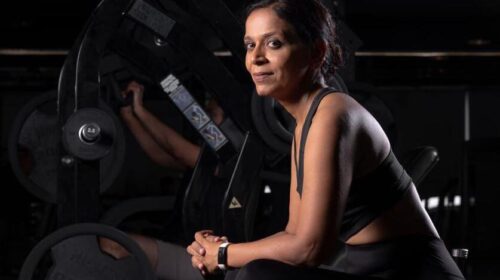
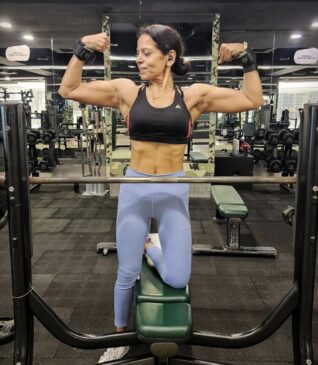
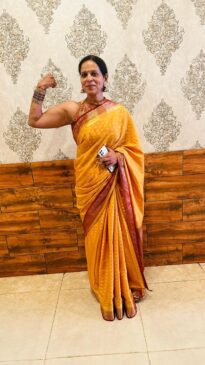
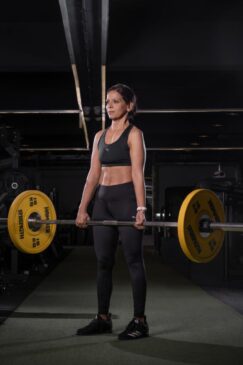
At BrilliantRead Media, we always strive to bring meaningful and powerful stories from India and around the world to empower and motivate our growing community. As part of this endeavour, we invited Sushma Pachouri Khadia for an exclusive interview with us. Sushma is a Fitness Coach, Model and an Influencer. Let’s learn more about her background, journey and her advice for our community!
Excerpts from our exclusive interview with Sushma:
What inspired you to begin your fitness journey?
My fitness journey began because of my own medical conditions. I was diagnosed with Lean PCOS, and because of that I went through four consecutive miscarriages. My fifth pregnancy was extremely complicated, and I had to remain on complete bed rest.
During that time, my weight increased drastically. I went from 50 kilograms to 93 kilograms. After my delivery, I started experiencing severe knee pain, and I was also diagnosed with anemia. That was when my doctor clearly told me that I needed to lose weight for the sake of my health.
Along with the medical issues, I was also struggling with how I looked and felt about myself. I simply did not feel comfortable in my own body anymore. That became the turning point where I decided to start my fitness journey.
What were the biggest challenges you faced in the beginning?
I come from a very conservative family and a small city, so going to the gym was not considered normal for women.
When I first thought about joining a gym, people around me questioned my decision. I was often told things like, “Why do you need to go to the gym? Household work is enough exercise.” Some even asked, “Who are you trying to show yourself to?”
Those comments were discouraging.
On a personal level, the first day I entered the gym was also emotionally challenging. I was overweight and surrounded by very fit people. I felt extremely conscious and thought that everyone was looking at me.
But I kept reminding myself why I had started. Slowly, those fears started fading as I focused on my goals.
Being from a medical background, how did it influence your approach to fitness and nutrition?
Because I come from a medical background, I have always understood the physiology and pathophysiology of the human body.
In acute conditions, medicines are important. But when it comes to chronic conditions like diabetes, blood pressure, PCOS, or PCOD, doctors usually recommend lifestyle modification.
This understanding helped me design nutrition and lifestyle plans more effectively. I could identify the problem areas in the body and build diet plans accordingly.
What is your philosophy when it comes to sustainable weight loss?
The most important principle is balance and sustainability.
People think that they need to give up everything they enjoy in order to lose weight. That is not true. For example, I love tea and I never gave it up during my fitness journey. Earlier I used to drink many cups of tea a day, but I gradually reduced the quantity.
Fitness is about small, sustainable changes in daily life, not extreme restrictions.
Our focus is always on consistency and discipline, helping people move slowly but steadily toward their goals.
Why do many people struggle with consistency in fitness?
Most people struggle because they chase perfection.
When they begin their fitness journey, they try to change everything at once—diet, exercise, sleep, water intake, everything. They expect instant results.
When those results don’t come quickly, they give up.
What we teach people instead is to start small. For example:
> If you can follow the diet, focus on that first.
> If you cannot exercise daily, start with one or two days a week.
Once people start seeing small improvements, their mindset gradually changes and they become more motivated to continue.
What are some common mistakes people make when trying to lose weight?
Today, the internet is full of information, and people try to follow everything they see online.
One day they go gluten-free, the next day lactose-free, and then they try some extreme diet.
But they forget one simple fact: if someone gained 10 kilograms over one year, it cannot realistically disappear in 10–12 weeks through extreme measures.
Sustainable progress requires patience and realistic expectations.
Why is strength training important, especially for women?
Strength training is extremely important for women.
As women age, their bone density begins to decrease, and there is a natural process of muscle loss called sarcopenia.
Strength training helps in:
– Maintaining muscle mass
– Improving bone health
– Increasing metabolism
– Enhancing flexibility and mobility
It also helps women manage menopause-related changes more effectively.
Many women fear that weight training will make them bulky. Is that true?
This is one of the biggest myths.
Women do not produce testosterone in the same way men do, which means they cannot develop bulky muscles like men through normal weight training.
Instead, strength training helps women become stronger, leaner, and healthier.
How can women balance fitness, family, and career?
The first step is for women to stop believing that they must be superhuman and do everything themselves.
When I started working full-time in fitness, I realized I could not manage everything alone. So I began outsourcing certain household responsibilities.
If you are building a career and earning, it is perfectly okay to delegate tasks. This allows you to focus on your goals and maintain balance in life.
What would you like to say to women in their late 30s, 40s, or 50s who want to start their fitness journey?
It is never too late to begin.
If you want to start your transformation journey even in your 40s, you absolutely can. The body is capable of adapting and improving at any age.
The most important thing is simply to start.
What moment in your journey made you feel the most proud?
There are many moments, but one that stands out is when I competed in a fitness competition at the age of 44.
Initially, people in my family said it was impossible. No one in our family had ever done something like that before.
But I persisted. I trained hard, stepped onto the stage, and won a gold medal.
When I look back at that moment, I remember the struggles and doubts I faced. Winning that medal felt like proof that persistence truly pays off.
What simple advice would you give someone starting their fitness journey today?
I would say three simple things:
– Don’t chase perfection.
– Chase discipline.
– Chase consistency.
You didn’t gain weight overnight, so you cannot lose it overnight either.
Start with simple habits:
– Walk 10,000 steps daily
– Add protein in every meal
– Drink enough water
Small steps eventually lead to big transformations.
How important is nutrition in fitness?
Nutrition is extremely important.
In fact, I often say that nutrition is 80% of the journey, and exercise is 20%.
What you eat determines whether your body moves toward health or disease. Even healthy food can become harmful if consumed in excess.
So the focus should always be on balanced nutrition and portion control.
What does a typical day in your routine look like?
My routine is quite simple.
> I start my day with tea.
> Then I take a scoop of whey protein.
> Lunch is a normal Indian meal—dal, rice, roti, and vegetables.
> In the evening, I have tea again.
> Later, I take another scoop of whey protein and some fruits.
Throughout the day, I drink about 3 litres of water, walk 10,000 steps, and spend 1 to 1.5 hours working out.
How has fitness transformed your life beyond the physical aspect?
Fitness did not just transform me physically.
It transformed me mentally, socially, and financially as well.
It gave me confidence, purpose, and a platform where I can help others improve their health and lifestyle.
If you could give advice to your younger self, what would it be?
I would tell my younger self to listen to my parents, especially about nutrition.
Until the age of 28, I never ate green vegetables. I mostly ate potatoes. Because of poor nutrition, my hemoglobin dropped to 6 during pregnancy, and I had to undergo blood transfusions.
If I had developed healthy eating habits earlier, I might have avoided many health struggles.
What is your vision for the future?
I am very happy with the work I am doing today.
My goal is to continue growing in this field and help more people, especially those dealing with chronic medical conditions, regain their health through fitness and lifestyle changes.
I want to guide people who have lost hope and show them that transformation is always possible.
BrilliantRead is committed to bringing stories from the startup ecosystem, stories that reshape our perspective, add value to our community and be a constant source of motivation not just for our community but also for the whole ecosystem of entrepreneurs and aspiring individuals.
Note: If you have a similar story to share with our audience and would like to be featured on our online magazine, then please write to us at [email protected], we will review your story and extend an invitation to feature if it is worth publishing.